
Below you will find a selection of observations, celebrations and bits and pieces that I find worth sharing. My ever growing garden, a 5000 sqm site at the base of Mount Pirongia, serves as both an experiment and a playground and will feature heavily here. I love watching it evolve and become more dynamic as colours, forms and textures merge and settle into their surroundings and biodiversity increases alongside growth. I will also share other happenings, tips or garden based pieces of inspiration that stand out along the way.
Thanks for visiting - Veronica
7th October 2026
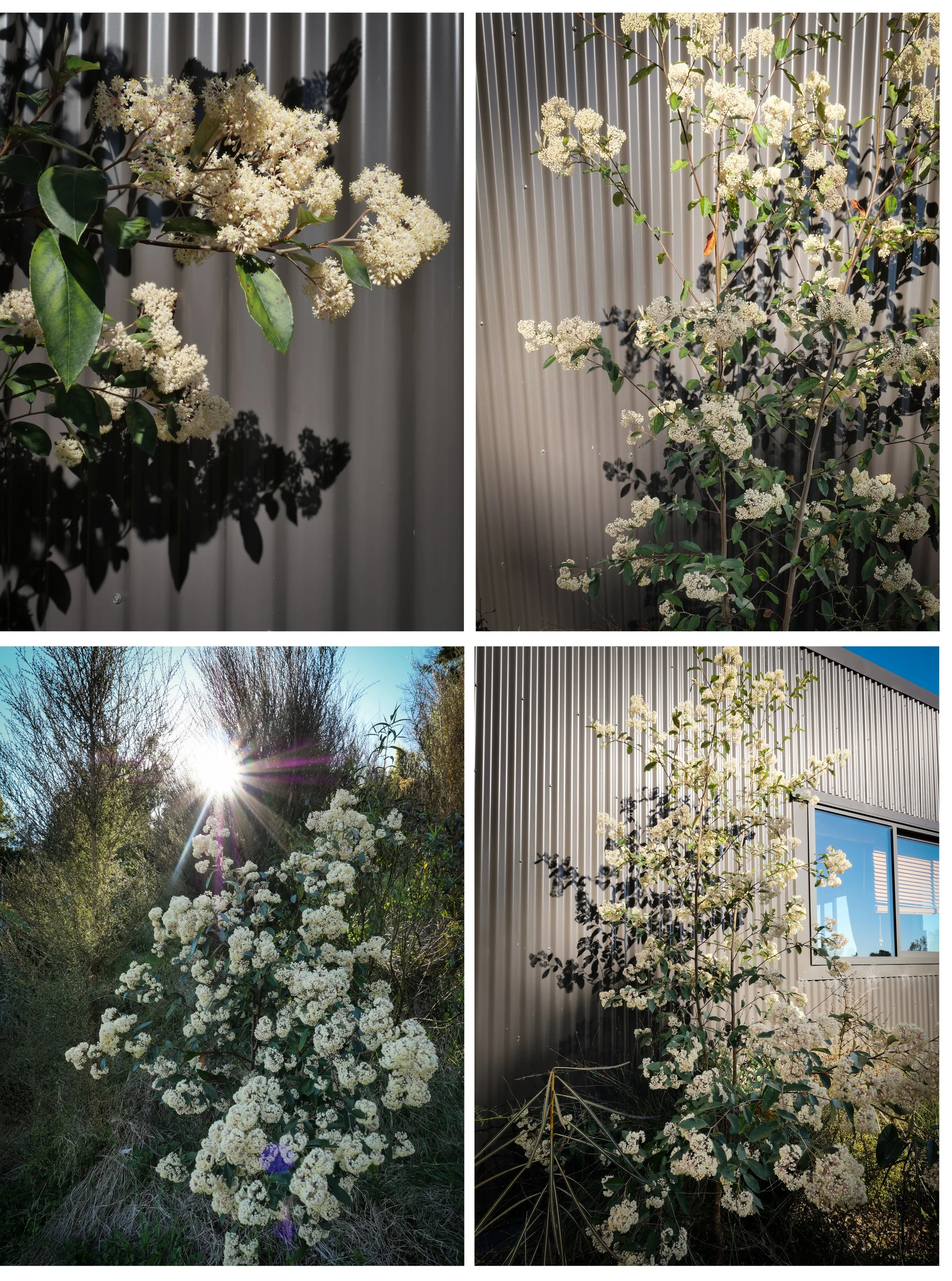
Pomaderris hamiltonii doing its thing…
This delightful NZ native, also known as ‘pale-flowered kūmarahou’, has an abundance of cream buds, then flowers, bringing a softness through winter before finally bursting into bloom in early spring.
Pomaderris hamiltonii is a nationally vulnerable species, typically making its home north of Auckland on roadside banks, disturbed areas and regenerating sites. While I haven’t seen this species growing in the wild, it is VERY happy in both our north-facing clay bank and in a shadier, slightly richer area on the edge of Mount Pirongia.
It is very closely related to Pomaderris kumeraho, or kūmarahou, which has a brighter yellow flower and is typically a smaller-growing plant. Kūmarahou has an important place in Māori history, and the two species are said to be interchangeable in many of their traditional uses.
One of the things I find particularly interesting about kūmarahou is the way its flowering was used as a seasonal marker to begin planting kūmara and I can see why, as it comes early but after any risk of frost and you cant miss it!
Kūmarahou was also an important rongoā plant. The leaves and flowers were traditionally brewed into a bitter tea or wairākau and used for coughs, colds and other chest issues. It was also valued as a cleansing tonic for the blood, while the leaves and flowers could be crushed with water to create an almost soapy wash for the skin, cuts and wounds.
I love that a plant that has so much value in the winter garden has this much history and healing behind it. And, despite being threatened in the wild, it has turned out to be one of those plants that seems remarkably unfussy and an absolute delight in our garden!
27th July 2026
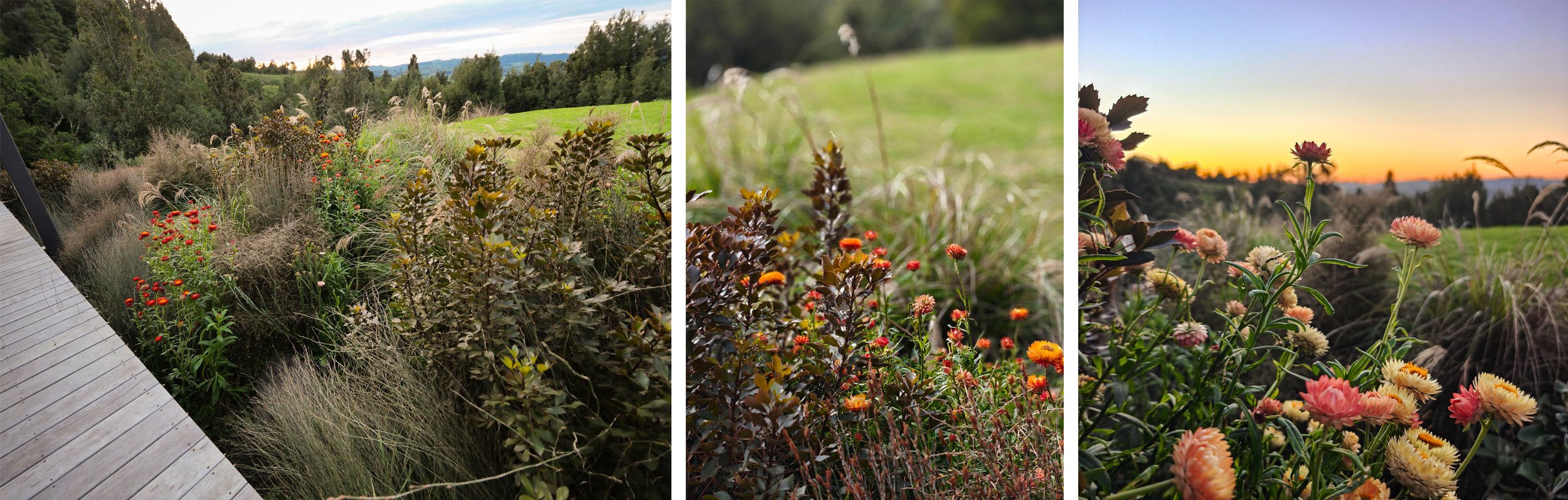
Strawflowers still shining…
Strawflowers have been one of the highlights of the garden this year. Planted in early spring, they took about a month to burst into flower and have been going for it ever since! As winter settles in blooms become a little harder to come by; I am certainly appreciating their energetic, earthy tonal range and longevity in the garden. The plants are a bit sprawling and floppy so having neighbours that can lend a bit of support is handy but I am loving how great they look with our NZ natives, shown here with oioi, Pseudopanax ‘Rangitera’, Coprosma rhamnoides and Chionochloa flavicans (miniature toetoe).
The other good news is that dried flowers, particularly perennial flowers and seed heads, are having a bit of a revival. These beauties retain their colour and form remarkably well, making them a lovely way to bring a little of the garden indoors over winter.
5th May 2026
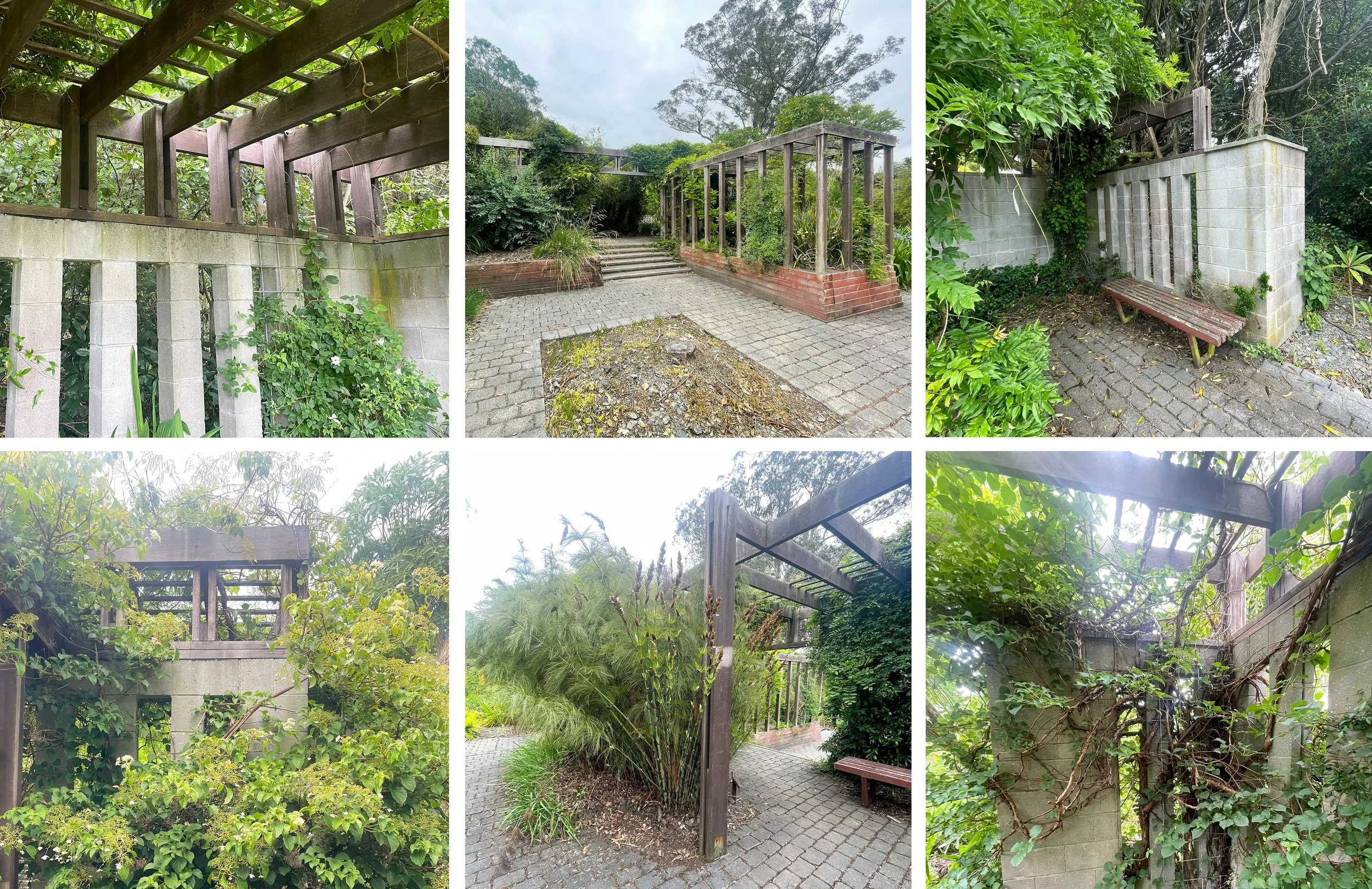
Dunedin Botanic Gardens, mysterious mid-century treasure…
I stumbled upon this neglected retro treasure at the top of the Dunedin Botanic Gardens while visiting this summer. As an admirer of the Brutalist style that flourished in NZ particularly in a civic context in the 60’s and 70’s, it was unexpected and exciting to find this approach in a garden setting! The poetic contrast here between the weight, simplicity and repetition of the build forms and the wild unkempt planting is delightful. The drop into the sunken garden and the sense of enclosure felt spacious, solid and peaceful although a little unloved. I was excited to see the Hydrangea petioralis (climbing Hydrangea) and the Elegia capensis (South African horsetail reed) doing their thing and adding to the mid-century feel.
Upon returning home I hunted for information on the garden only to find the elusive title of ‘Pergola Garden’ on one detailed map. There was no obvious designer attached to it, no blurb, no story. I would love to see it celebrated and restored or acknowledged at the very least and encourage anyone visiting the Dunedin Botanic Gardens to hunt it down!
30th April 2026
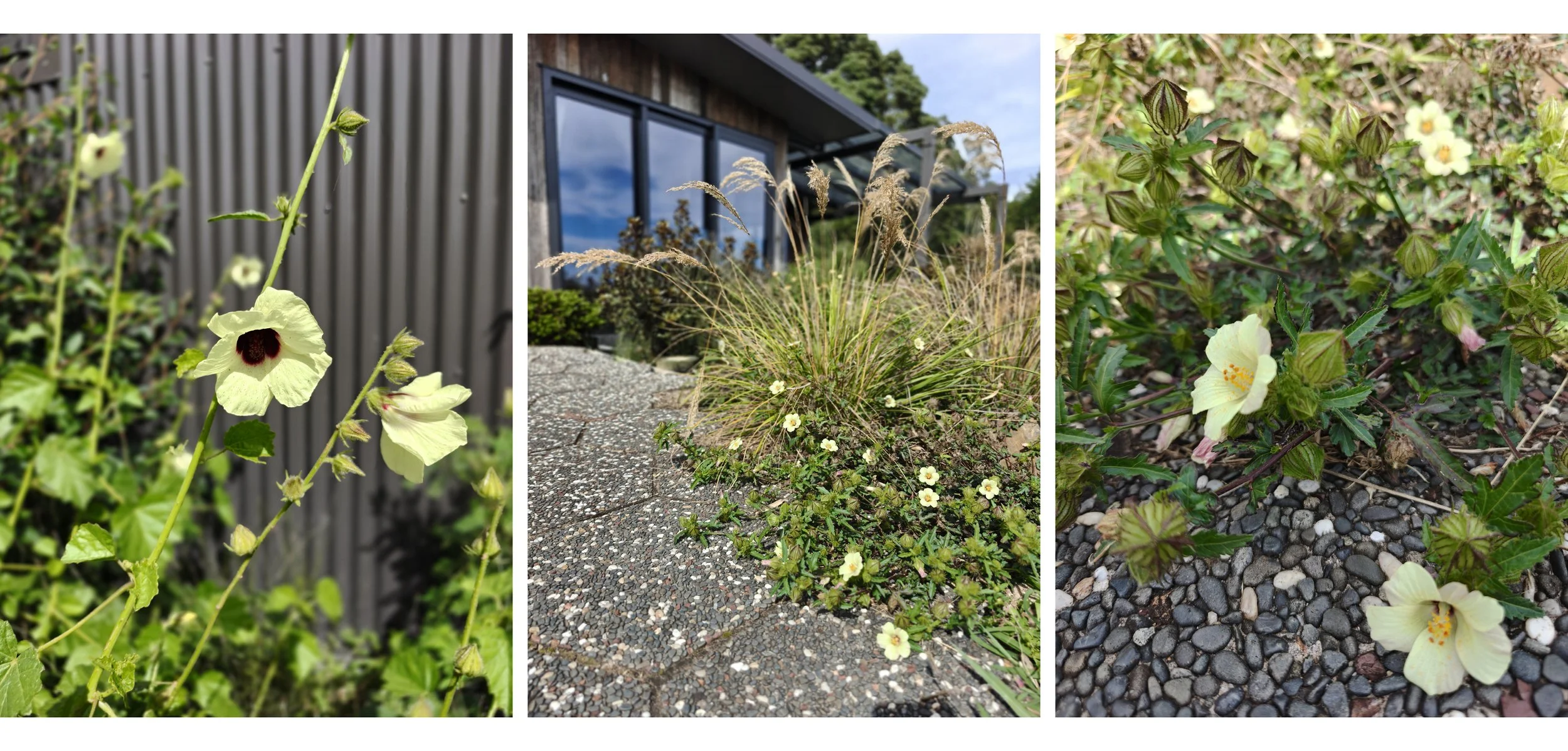
Our NZ Native Hibiscus…
These little perennial beauties are our rare and delightful NZ native hibiscus species enjoying the sunshine. The smallest of the two (right of image) is also known as Hibiscus richardsonii or Puarangi with the larger stemmed flower belonging to Hibiscus diversifolius. These plants have quite different habits with Puarangi preferring a hot, dry spot and the larger H. diversifolia coping with some shade and wet feet. Be warned although lovely the upright, sprawling 2m high H. diversifolia is spikey and can be a little nasty to work around so better in the back of the garden in less visited areas. The flowers are elegant and unique working in well with the darker more moody colours of a lot of our natives. Both flower for a long time and while the suns out, although each flower is short lived there are many buds. I am told that the Puarangi is a good self seeder, I hope so!!.
24th April 2026
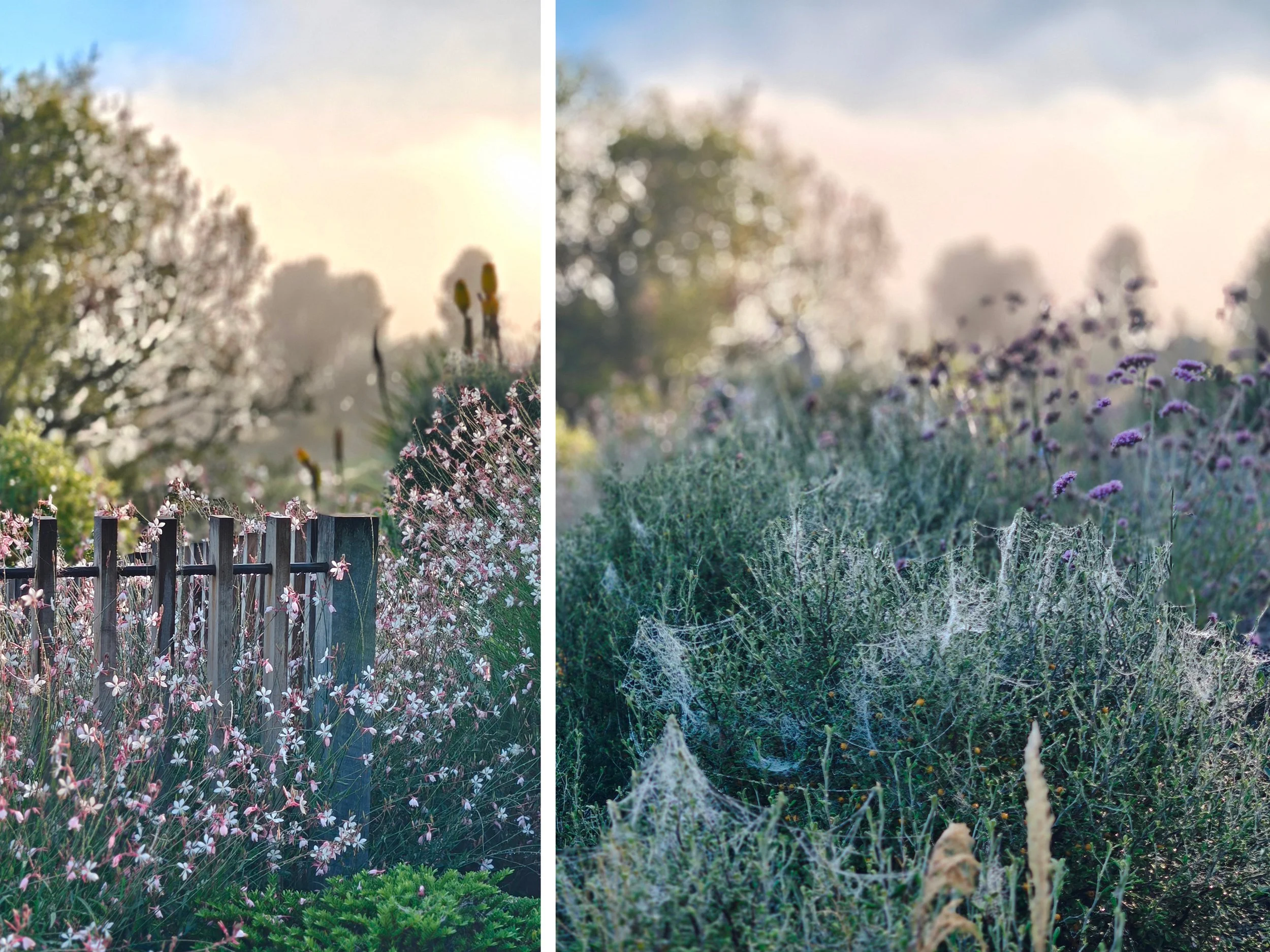
Misty mornings expose rich insect life…
While this prospect may not be to exciting to those out there with phobias around our arachnid friends, I am re-assured that they seem very happy where they are and have no incentive to come my way. Our native divaricating plants, of which there are many are known to be a haven for both insect and native skinks, their dense habit provides protection and shelter and are a favorite in my garden. Misty mornings where dew settles on the almost invisible by day webs are really the only time that I notice how prolific, abundant and interconnected these are. Having a diverse range of insect species in the garden provides food for birds and skinks and competition for pests.
Shown here are Gaura ‘Whirling butterflies’ Corokia ‘Yellow Wonder’ & Verbena bonariensis (this last plant is somewhat weedy and coming up in our gravel areas but cannot compete with grasses and are easy to identify and pull out should you wish:)